Some things I've leaned from Jiu Jitsu 25 January 2026
On January 10th, 2026, I received my purple belt. I started training Brazilian Jiu Jitsu at Easton in Boulder at the end of 2018. I was inspired to try it out after listening to a bunch of episodes of Jocko Podcast. They continually talked about how great it was, and they were right.
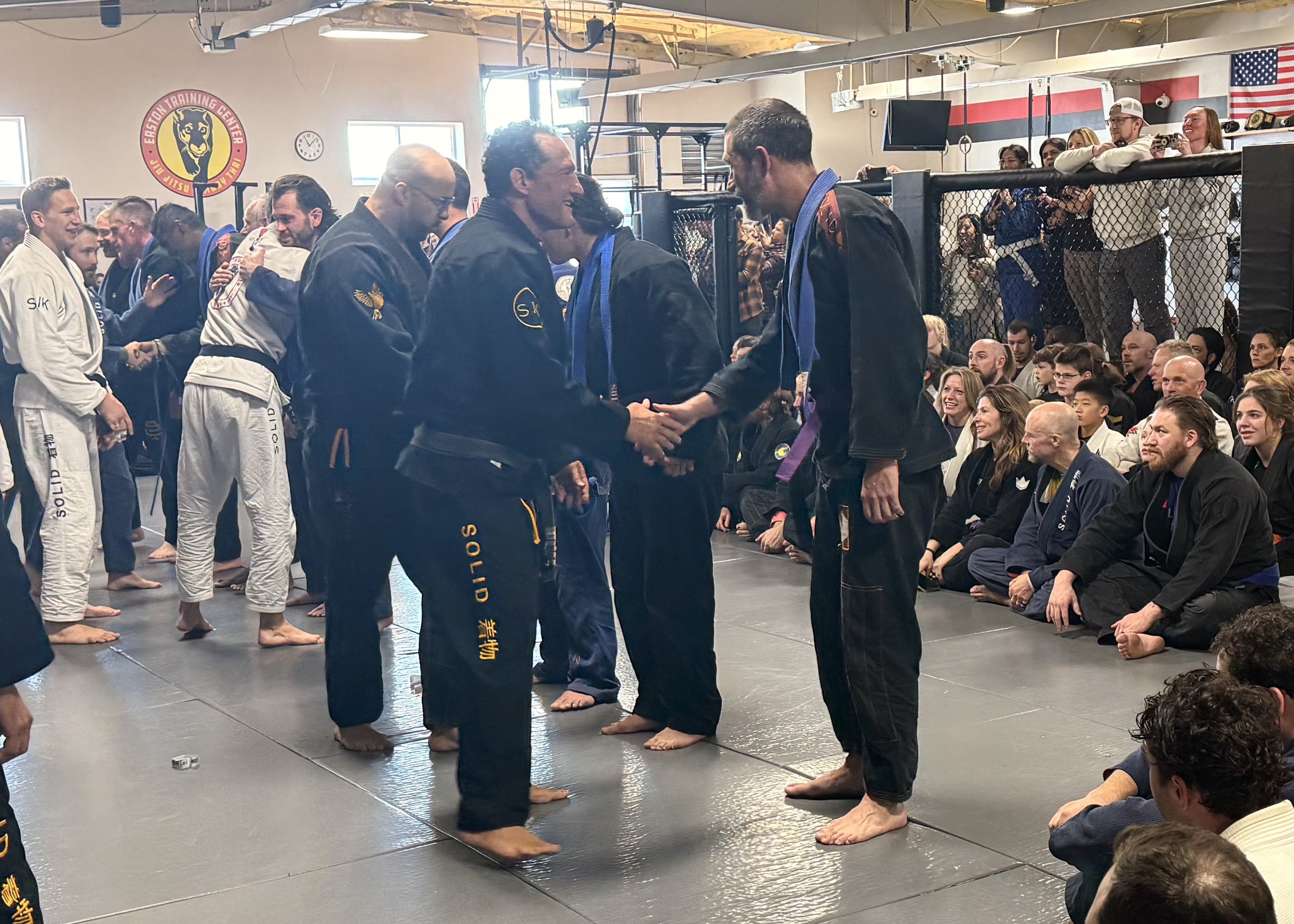
In honor of the occasion, I wanted to post this draft I’d started back in 2019 on some of the benefits.
A little over a year ago, I started training Brazilian Jiu Jitsu at Easton in Boulder. My initial goals were simple: I wanted to get in shape and learn how to defend myself. I’ve also discovered a lot of unexpected benefits. The least expected has been improved communication with others, specifically giving and receiving feedback. In almost every class you are paired up with a new person, so each time is a chance to learn how to build rapport and communicate.
If you’re the junior partner, you’re likely to get some feedback after you perform a drill (maybe you skipped a step, or did something incorrectly). Here, you get a choice: be defensive and argue–guaranteeing your partner won’t bother saying anything else–or try to understand what they meant, adjust, and act grateful. At the beginning, I found it helpful to remind myself I was new, didn’t know anything, and was in class to learn. As I progressed, I discovered if I asked a question early on and made sure to apply their answer, it would encourage them to point out other things I could improve.
As the senior student, things get more interesting. With more experience, you’re in the position to give feedback and you decide how to best communicate with your partner. Do they seem open to comments? Should you focus on what they’re doing wrong, or what they’re doing right? With a brand new student, it’s probably best to focus on what they’re doing right and continue to encourage them. If you’ve trained with them a few times, you can probably point out something wrong straight away. But is there a way to phrase it that’s more diplomatic?
I found dealing with peers to be the most challenging situation. When you’re with a partner who is close to your level there’s no clear authority to defer to. If they commented that I was doing something incorrectly, was it because they’d already been to several classes this week and really learned the technique? Or did they misunderstand the coach’s instructions? I had to listen to what they were saying and evaluate it on its merits. It was challenging in the moment but I finally learned to just reply, “Thanks for letting me know. Do you mind if I do it again?”
Once I started noticing this aspect of martial arts, I started looking for other areas of my life where I could apply it. At home, I’ve found focusing on the things my children do right is much more effective than nagging them. I still correct them but now negative comments are a much smaller percentage of what I say. At work, we have a formal quarterly review process to give performance feedback, but it’s hard to master something you do that infrequently. Now, I try to give more small, immediate, feedback to coworkers. And when people give me feedback at work, I try to be appreciative and responsive to it.
I’ve learned that Ju Jitsu is about more than just getting in shape or self-defense. A large part of it is studying human nature and finding ways to shape the behavior of another person. Often you’ll do so by physically pushing or pulling them, other times you leave them an opening where you would like them to move, but occasionally your words are the best choice.